
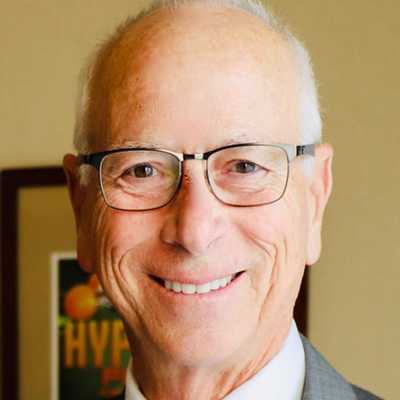
Colonel Carl Meade is the founder and Directing Executive of CM2 Solutions, LLC, helping organizations integrate advanced technologies while minimizing risk and maximizing strategic value. Prior to founding CM2 Solutions, he directed a portfolio of classified programs for Northrop Grumman Aerospace Systems and served as Director of Space Exploration Systems, overseeing major government initiatives related to human spaceflight. Earlier, at Lockheed Martin’s Skunk Works, he managed advanced aerospace vehicle development and held leadership roles within the X-33 program, including Program Director. Before entering industry, Colonel Meade served as a U.S. Air Force officer on astronaut duty with NASA.
He began his engineering career as a Hughes Fellow at the California Institute of Technology and later worked at Hughes Aircraft Company designing advanced communications, navigation, control, and radar systems. Called to active duty with the U.S. Air Force, he flew tactical fighter aircraft before graduating first in his class from the USAF Test Pilot School at Edwards Air Force Base. He subsequently tested experimental fighter aircraft and instructed future test pilots at the Air Force Flight Test Center.
Selected as a NASA astronaut, Colonel Meade served in a variety of technical and leadership roles at the Johnson Space Center and flew on three Space Shuttle missions: STS-38, STS-50, and STS-64. During an untethered spacewalk on STS-64, he conducted the first in-space flight test of the Simplified Aid for EVA Rescue (SAFER), an astronaut rescue propulsion system. Following an electrical failure during testing, he successfully recovered the unit and was awarded the U.S. Air Force Distinguished Flying Cross.
Colonel Meade has authored numerous publications on space systems architecture, spacecraft design, and control systems and is a Fellow of the Society of Experimental Test Pilots. He has chaired National Research Council committees evaluating NASA aeronautics research priorities and served on the NRC committee assessing national aerospace initiatives.
He earned a Bachelor of Science in Electrical Engineering from The University of Texas at Austin and a Master of Science in Electrical Engineering from the California Institute of Technology. A longtime supporter of UT Austin, he has served on the Cockrell School of Engineering External Advisory Committee for Aerospace Engineering and Engineering Mechanics and actively mentors aspiring and current engineering students. Today, he continues to inspire future engineers while pursuing a lifelong passion project—hand-building an experimental aircraft from raw materials, a multi-year endeavor now nearing completion.


